

- Disability harassment report: What managers do first
- 1. Respond to active conduct and immediate safety concerns
- 2. Record facts and report through the employer’s process
- 3. Let HR handle the review and preserve records carefully
- 4. Watch for retaliation concerns and avoid punitive changes
- 5. Keep accommodation concerns separate but connected
- What to do now
Disability harassment report: What managers do first
When an employee reports mocking, exclusion, or interference connected to a disability, a manager’s first job is practical: stop active conduct if necessary, check for immediate safety concerns, record observable facts, and report the concern through the employer’s internal process. The manager does not need to decide whether the conduct legally qualifies as harassment before taking those steps.
This guide is for supervisors and managers who witness concerning conduct or receive a complaint. It covers the response a manager can safely make inside an employer’s process, including documentation, escalation, confidentiality, investigation boundaries, retaliation concerns, and accommodation-related issues. Company procedures differ, so use the employer’s written policy and ask HR, employee relations, compliance, an ethics hotline, or employment counsel about questions involving discipline, accommodation obligations, or a formal charge.
1. Respond to active conduct and immediate safety concerns

If the conduct is happening while the manager is present, interrupt it calmly and directly. A manager might say:
“That comment is not appropriate at work. Stop the conversation and return to the task.”
The purpose is to stop the behavior, not to argue about intent or announce a legal conclusion. Avoid statements such as “You are harassing someone” or “This is definitely illegal.” Whether conduct violates a policy or law belongs in the employer’s review process.
Check only for an immediate safety or emergency concern. If someone faces a threat of violence, physical danger, or another urgent risk, follow the company’s emergency and workplace-safety procedures instead of waiting for routine HR escalation. If an employee raises an accommodation or medical issue, connect that concern to the employer’s accommodation process rather than trying to assess it personally.
A manager can ask whether immediate assistance is needed without requesting private medical details:
“Are you safe right now, and do you need immediate assistance? I can connect you with the appropriate workplace contact.”
Do not ask an employee to explain a diagnosis, provide medical information in front of coworkers, or prove an accommodation need during the initial response. If there is no emergency, move the conversation to a private setting and continue with the reporting process.
The ADA.gov, Introduction to the ADA explains general protections that may apply to people with disabilities. That information does not require a manager to classify the incident on the spot. The safer response is to address the immediate conduct, capture the facts, and route the concern for review.
2. Record facts and report through the employer’s process
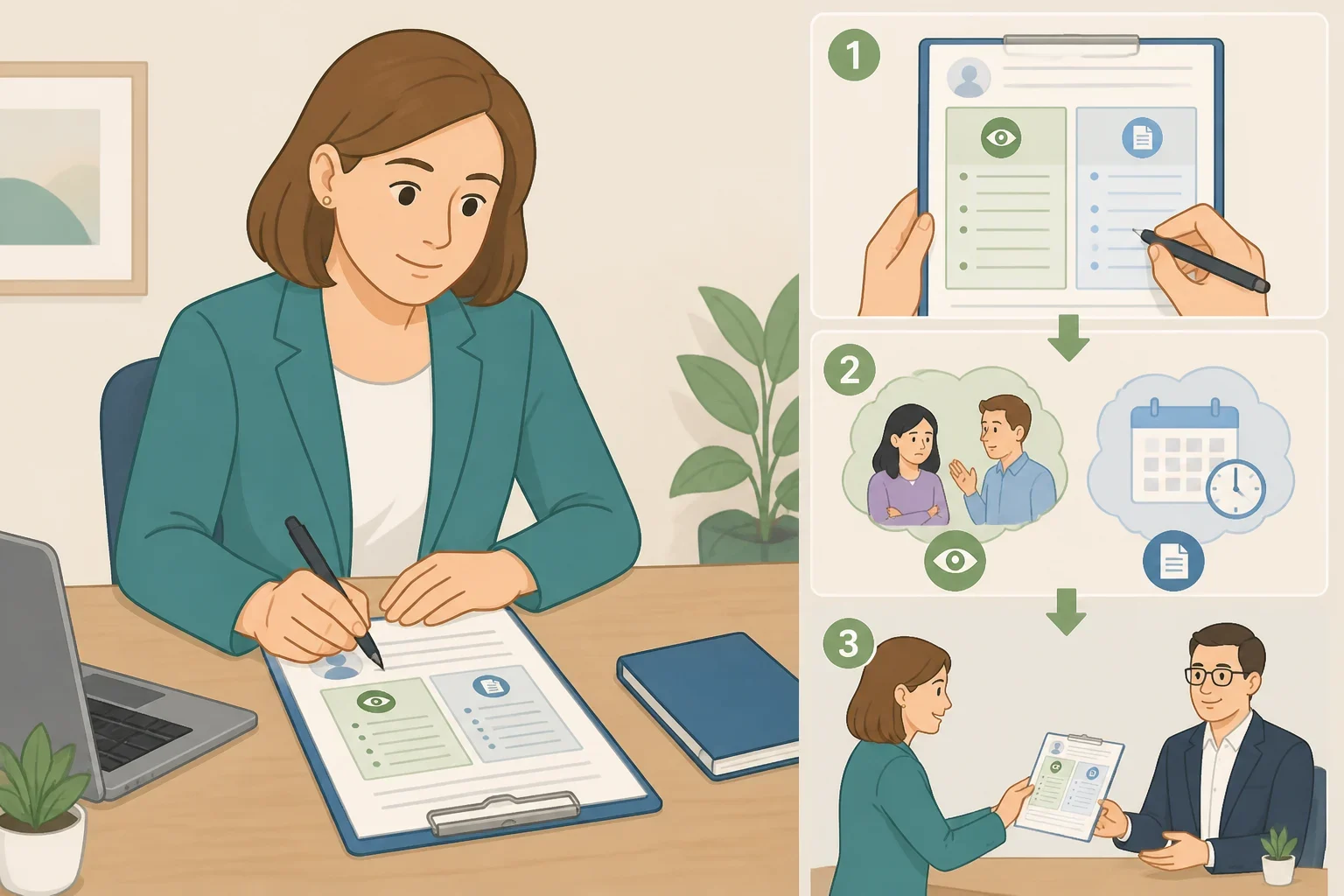
Write down what was observed or reported as soon as practical. Use the employer’s reporting form, case-management system, email procedure, or other channel identified in its policy. If the policy lists an HR, employee-relations, compliance, or ethics contact, use that route. If the usual contact is involved in the complaint, use the alternate channel listed by the employer.
A manager’s notes should distinguish direct observations from secondhand information. Include:
- The date, time, and location
- The exact words used, when remembered
- The actions observed
- The names and roles of people present
- The employee’s description of what happened
- Any immediate safety concern
- Any message, schedule, assignment, or document identified by the employee
- The steps taken after the report
For example:
“At approximately [time], in [location], the manager heard [exact words] during a conversation involving [names and roles]. The employee later reported that the comment related to [disability or accommodation, using only the information the employee volunteered]. The manager instructed the employees to stop the conversation and contacted [designated reporting contact].”
Avoid conclusions about motive, credibility, diagnosis, or intent. “The manager heard Alex say, ‘…’” is different from “Alex intended to intimidate Taylor.” Likewise, “Taylor reported that Alex made a comment” is more precise than presenting the report as something the manager personally witnessed.
Do not conduct informal fact-finding before reporting. A manager may need to clarify what happened enough to document it, but should not interview several employees, confront the alleged harasser, ask witnesses to compare accounts, or search personal devices before HR or the designated investigator provides direction.
Report according to the employer’s policy without promising a universal deadline that may not fit every workplace. If the listed contact is unavailable, follow the next route in the policy, such as employee relations, compliance, an ethics hotline, or another manager. If no route is clear, contact one of those functions and explain that the normal reporting channel may present a conflict.
A manager can set realistic expectations with the reporting employee:
“I’m sorry this happened. I’m going to document what you told me and connect you with the appropriate HR contact. I can’t promise a specific outcome, but I will not ignore the report.”
Do not promise absolute confidentiality. Explain that information may need to be shared with people responsible for reviewing and addressing the concern. Limit the discussion to those involved in the process, and do not discuss the complaint with uninvolved coworkers.
3. Let HR handle the review and preserve records carefully

Once the concern has been escalated, the manager’s role is to cooperate with the employer’s review. Provide the notes already gathered, identify potential witnesses, answer questions factually, and follow instructions about temporary operational changes.
The identity of the alleged harasser can affect how the employer handles the report. The concern may involve a supervisor, coworker, client, vendor, or another person outside the organization. Give HR the person’s relationship to the company, what the manager knew, and what action was taken. Do not try to decide the employer’s responsibility or legal exposure independently.
Do not decide discipline, promise that someone will be fired, or tell either employee what the outcome should be. Independent interviews and off-the-record conversations can create conflicting accounts and interfere with the employer’s process.
Records require similar care. Ask HR or the designated investigator how relevant records should be preserved, and do not delete or alter messages, schedules, emails, assignments, or other workplace records. Do not secretly access personal accounts, copy private medical information, or record conversations unless the employer’s policy and applicable law clearly permit it.
If HR or employment counsel gives instructions about preserving records, follow those instructions rather than deciding independently what must be kept. If the company issues a records-preservation instruction or litigation hold, send questions to HR or counsel. A manager should not interpret the scope of that instruction alone.
Do not tell employees to “keep this between us,” delete messages, revise notes, or avoid particular coworkers unless HR directs a temporary measure. Those instructions can interfere with the review and create an incomplete record.
Managers may still need to handle ordinary work. Continue setting expectations, assigning work, and addressing performance issues consistently. If a performance concern involves the same disability, accommodation, employee, or alleged harasser, tell HR before taking action so the connected issues can be reviewed together.
If coworkers ask what happened, use a short response:
“I can’t discuss another employee’s situation. Please direct questions about the process to HR.”
That protects privacy without promising secrecy or confirming details.
4. Watch for retaliation concerns and avoid punitive changes
After a report, keep workplace treatment consistent and watch for concrete changes that need to be reported. The EEOC Retaliation overview describes protections for people who report concerns or participate in a workplace review. Whether a particular action raises a retaliation issue depends on the facts and applicable law, so managers should route concerns rather than make that determination themselves.
Examples that warrant prompt review include:
- A sudden schedule cut without a documented business reason
- Removal from ordinary meetings or projects
- A demotion or materially different assignment
- Negative treatment after the employee participated as a witness
- Discipline that differs from how similar conduct was handled
- Pressure to withdraw or change a report
These changes do not automatically establish retaliation. Timing, context, the reason given for the change, and how comparable employees were treated may all matter. Record the change through the employer’s required system and notify HR or the designated contact.
Avoid moving or isolating the employee who reported the conduct “for their own protection” without HR direction. A temporary change may be appropriate for safety, workflow, or another legitimate reason, but moving only the affected employee can disrupt working conditions or appear punitive. Ask HR how an interim measure should be structured and explained.
The same caution applies to the alleged harasser and witnesses. Do not make schedule, seating, reporting, or assignment changes independently unless an immediate safety issue requires action under the company’s emergency procedure. Document the reason for any urgent step and notify the appropriate workplace contact as soon as possible.
5. Keep accommodation concerns separate but connected

Harassment and accommodation concerns can arise in the same report. An employee may describe mocking related to a disability while also saying that a coworker interfered with an accommodation or that the current work arrangement no longer addresses a need.
A harassment report does not automatically reopen, change, or cancel an accommodation. Ask whether the employee is raising a current workplace need, then connect that concern to HR through the employer’s accommodation process. The EEOC Guidance on Reasonable Accommodation provides relevant federal guidance, but the employer’s process and the facts still control the next step.
Keep the questions distinct:
- What conduct has been reported, and how should the employer review it?
- Does the employee need to discuss an accommodation or a change in work arrangements?
Send both issues to the appropriate HR contact when they are connected. Do not ask coworkers about the employee’s medical condition or disclose accommodation details to explain a management decision. If the employee shares private medical information, limit its distribution to people who need it for the applicable workplace process.
What to do now
Managers should know the reporting route before an incident occurs. Review the company’s harassment, emergency, records-preservation, and accommodation procedures, and confirm the primary and alternate contacts.
If a report has already been made, use this sequence:
- Stop active conduct if necessary and address any immediate safety concern.
- Record what was observed or reported, separating facts from conclusions.
- Submit the report through the employer’s required channel.
- Avoid promises, independent interviews, private investigations, and unnecessary medical questions.
- Follow HR’s instructions about records, interim measures, workplace treatment, and accommodation-related concerns.
Document the escalation through the system the employer requires. Then continue managing ordinary work consistently and report concrete follow-up concerns instead of trying to resolve them alone.
