

What is career rust-out? Signs, causes and how to fix it
What is career rust-out? It's what happens when a capable employee's skills sit unused for so long that motivation quietly corrodes, not from doing too much, but from doing too little that actually matters. It's the inverse of burnout, and it's turning up in more workplace conversations as engagement slides and career paths flatten out.
A tech worker identified by ABC News as Flax described the feeling this way: she kept showing up and performing well, but felt a "mental detachment" from work that no longer stimulated her, until she eventually left to start her own business (ABC News, reported two weeks ago). The pattern has a name researchers have used for decades: a mental and emotional decline caused by "a lack of stimulating work, excessive routine tasks and a persistent sense of intellectual boredom," a definition traced to a 1978 source cited in the Nature study on rust-out (Nature/Humanities and Social Sciences Communications).
ABC News also reports broader engagement data alongside its coverage of rust-out: Gallup's 2025 survey found 31% of U.S. workers actively engaged, down from 36% in 2020, with the steepest declines among younger employees (Gallup, via ABC News, reported two weeks ago). Below: what career rust-out means in plain terms, how it differs from burnout, the signs worth watching for, and the concrete steps to take before deciding whether to push for change or start looking elsewhere.
What is career rust-out?
Researchers describe rust-out as the deterioration that follows from underusing a person's potential, a state some have called "underbeing" (Nature, citing Leider and Buchholz, 1995). It shows up when someone is stuck doing repetitive administrative work, routine tasks, and jobs that never stretch what they can actually do (Nature, citing Gmelch and Chan, 1994; Clouston, 2015).
That definition comes from a study of 154 teacher educators in Ireland and the United Kingdom that also included interviews, not a survey of the broader workforce (Nature). ABC News describes the same pattern surfacing more widely: workers reporting disengagement rooted in a lack of purpose, challenge, or stimulation, not overwork (ABC News, reported two weeks ago). Getting the label right matters, because a mislabeled problem leads to the wrong fix. Someone who needs more challenging work will get little relief from advice built for someone who needs to work less.
The concept is a workplace pattern that researchers and journalists have documented, not a clinical diagnosis. Some of the research literature spells it "rustout" as one word; this article uses "career rust-out" throughout for consistency.
Career rust-out vs. burnout: what's the difference?
Burnout comes from the emotional exhaustion of chronic overload: too many demands, too much stimulation, and not enough time or support to keep up. Career rust-out runs the opposite direction, stemming from underusing an employee's skills and talents rather than overtaxing them (Nature, citing Clouston, 2015). Both are described as slow, often quiet processes of psychological erosion, not a single bad week or a breaking point (Nature, citing Etzion, 1988).
The two conditions aren't always mutually exclusive. A job that combines a heavy workload with repetitive, low-meaning tasks can produce symptoms of both at once, though none of the research cited here measures how often that overlap happens in practice. What matters most for a reader trying to self-diagnose is figuring out which direction the mismatch runs: doing too much, or too little that feels meaningful. That question decides the next conversation to have, whether to raise workload and support with a manager, or ask about role design and opportunities for challenge instead, since those are different asks with different solutions.
Signs of career rust-out to watch for
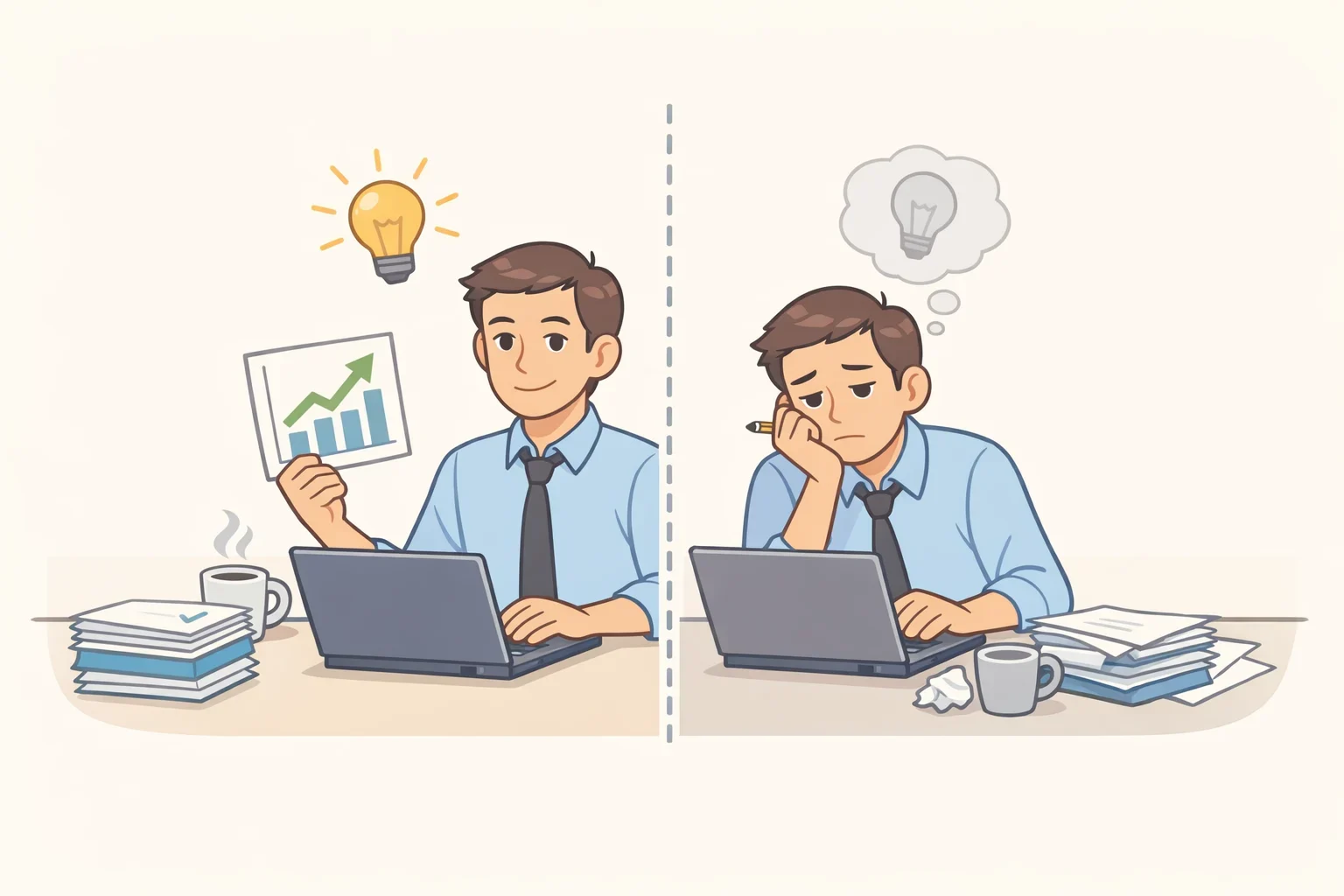
Flax's account shows that a worker can keep performing well while feeling completely checked out. She described continuing to show up as a high performer without the "vitality" she used to bring to her work, and put it plainly: "I lost excitement for the work itself" (ABC News, reported two weeks ago). Her output hadn't dropped, but the disengagement was real.
LinkedIn career expert Catherine Fisher told ABC News that many workers stay in roles that no longer motivate them simply to keep a paycheck coming, describing it as choosing to "dial it in" rather than leave (ABC News, reported two weeks ago). Fisher said prolonged disengagement, not a rough week, is the signal that it's time to reassess.
Researchers studying teacher educators add a few more markers worth recognizing: a sense of professional stagnation, a kind of dread about where the work is heading, and difficulty finding anything constructive to take from day-to-day experience (Nature). That study didn't produce a validated screening tool. It's a look at 154 educators in a specific field and region, not a broad diagnostic instrument, so treat these markers as prompts for honest self-reflection rather than a checklist. If the feelings are severe, persistent, or affecting daily functioning well beyond work, that's worth raising with a mental health professional, not something to sort out with a career framework alone.
The workplace conditions behind career rust-out
Feeling unchallenged at work isn't purely a personal failing to solve alone. One in four U.S. employees report they lack opportunities for advancement at their organization, according to Gallup's American Job Quality Study, a nationally representative survey of more than 18,000 working U.S. adults conducted with Jobs for the Future, the Families and Workers Fund, and the W.E. Upjohn Institute for Employment Research (Gallup, published last year).
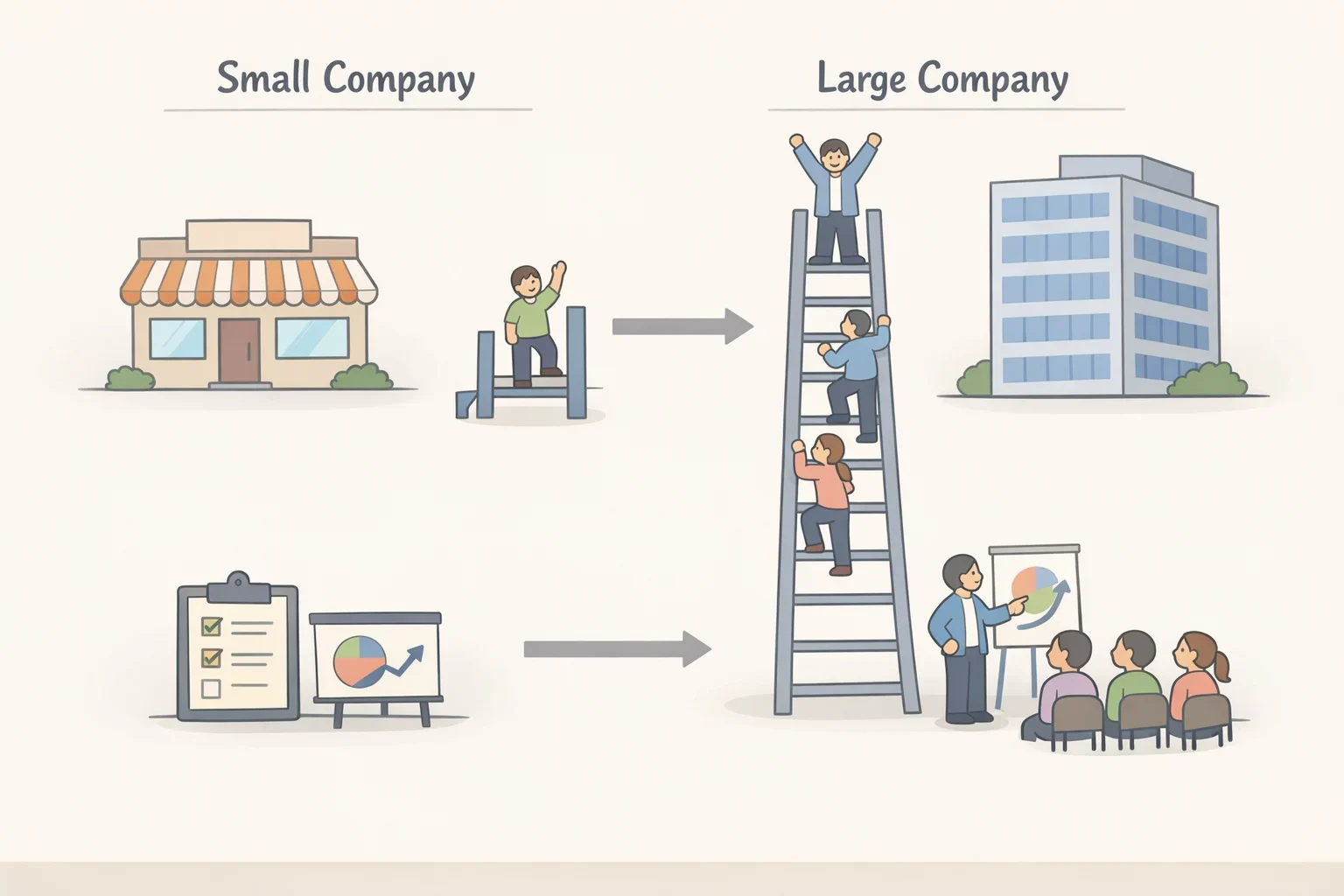
The growth-and-development figures below come from a narrower slice of that sample: 15,968 respondents who work for an employer in their primary job. Among that group, access to advancement is far from evenly distributed. Only about one in three employees at organizations with fewer than 10 workers report advancement opportunities, compared with 74% at organizations with 1,000 or more employees (Gallup, published last year). Company size may affect how many advancement opportunities exist, although the survey didn't measure stimulation or rust-out directly, so it's a related data point rather than direct evidence about this specific problem.
Training access follows a similar pattern. Just 45% of employees in that group report receiving training to build new skills, and only 28% have participated in a mentorship program. Among employees who took part in mentorship, whether as a mentor or mentee, 48% reported high job satisfaction, compared with 29% of those who hadn't participated (Gallup, published last year). That's an association Gallup found between mentorship participation and reported satisfaction, not proof that mentorship caused the difference, and it's based on employees' own survey responses rather than an audit of employer programs.
Employer size, training investment, and how advancement structures are built all affect how much room exists to fix rust-out internally. That's worth keeping in mind heading into the conversation below, since the same request can land very differently at a 10-person company than at one with 1,000 employees (Gallup, published last year).
How to overcome career rust-out at work

Start by naming the gap precisely. Fisher recommends asking directly what would restore motivation and what new skill or challenge might help close it (ABC News, reported two weeks ago). Before any conversation, it helps to identify one skill that's going unused and one real problem on the team that skill could help solve. That gives a request a business case instead of just a feeling.
A stretch assignment worth proposing usually has a few features: it draws on a skill that's already there rather than one that needs to be built from scratch, it solves a problem the manager or team actually cares about, it has a defined start and end point, and it doesn't quietly turn into extra unpaid work layered on top of an already full plate.
Fisher's advice is to bring solutions rather than problems to a manager, proposing a specific stretch assignment or project rather than asking a manager to fix the disengagement in general terms (ABC News, reported two weeks ago). A request framed that way tends to land better: "I'd like to contribute more to X. Could I take ownership of Y, or shadow Z to build that capability?" That's concrete enough for a manager to say yes to without restructuring the role.
The next part is Career Trend's guidance, not something drawn from the cited research: in the actual meeting, aim to leave with agreement on four things, the scope of the new work, what gets deprioritized to make room for it, what support or training is available, and a date to check back in. Vague commitments to "look into it" tend to fade without follow-through.
If a manager says no, ask what's actually driving the answer, whether it's timing, budget, skill readiness, or how the role is designed. Any of those answers points to a different next move, such as requesting a smaller pilot version of the assignment or a shadowing arrangement instead of full ownership, then revisiting the bigger ask after a few months.
Given Gallup's finding that mentorship participation is tied to higher reported satisfaction, asking about a mentorship program or an informal mentoring relationship is a specific, low-cost request worth raising in the same conversation, with the caveat that the connection Gallup found is an association rather than a guaranteed fix (Gallup, published last year).
If a manager genuinely has no room to offer new challenges, that's useful information rather than a failure. Fisher's next step is to lean on a professional network and start exploring outside opportunities before applying elsewhere (ABC News, reported two weeks ago). Documenting the specific skills the current role isn't using can help target informational interviews and job listings that actually call for them. A small employer with limited advancement infrastructure may simply not have the room a larger one does, and that's worth knowing before investing energy in a request that's unlikely to succeed.
What to do next

Rust-out and burnout sit at opposite ends of the same problem, underuse versus overload, but both describe a gradual erosion of engagement rather than a single bad week (Nature). Before assuming a job change is the only option, most readers experiencing the signs above have a lower-risk step to try first.
Write down one skill that's going unused in the current role and one specific assignment or project that would put it to work. Request a direct conversation with a manager, bring that proposal instead of a general complaint, and ask for agreement on scope, what gets deprioritized, and a follow-up date, ideally within four to six weeks. If the answer is no, ask why and push for a smaller pilot version before dropping the idea entirely.
Skip the internal process and move straight to an external search if what's driving the disengagement isn't underused skills at all, but an unsustainable workload, pay that hasn't kept pace, or a workplace issue like discrimination or retaliation. Those situations call for a faster response than a stretch-assignment conversation can offer, and sometimes a conversation with HR or an employment attorney before planning any further around the current role. For everyone else, giving the internal option one real test, with a defined proposal and a set date to revisit it, is a reasonable place to start before turning to a professional network to see what else is out there.
