


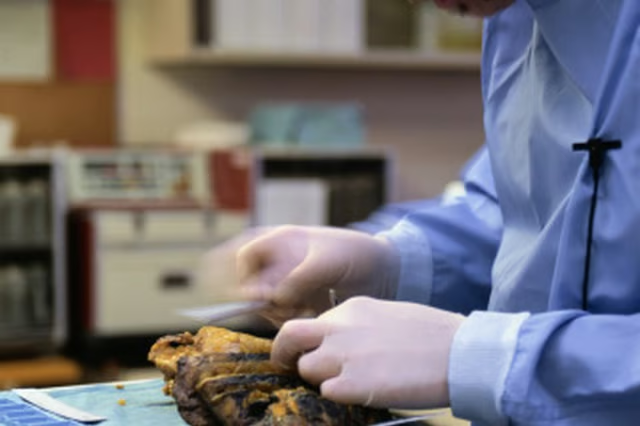
Coroners are medical examiners who have expert knowledge of the human body and the ability to determine the cause of death in most cases. Other names for coroners include medical legal investigators (MLI), forensic pathologists, or simply medical examiners. Coroners must have extensive medical training and licensing to work in their state of employment.
Undergraduate Education
Aspiring coroners typically need a medical degree to work as a licensed professional in this field. However, some positions are open to those with an undergraduate degree who have completed specialized coroner training program. While there are no required undergraduate majors to become a coroner, pursuing a degree in forensic science, biology or even criminology can help prepare you for a career in this field. Those who plan to attend medical school for training should complete an undergraduate major with a heavy emphasis in biological science, chemistry and human anatomy and physiology.
Medical School
According to O*NET Online, 85 percent of all coroners have either a doctorate or professional degree. Medical schools typically grant the doctor of medicine or M.D. degree. Schools of osteopathic medicine grant the doctor of osteopathy or D.O. degree. In some cases, a Ph.D. might also qualify aspiring coroners to work in this field. Medical school takes approximately four years to complete and includes a combination of coursework in advanced science and clinical training. Students generally complete coursework during the first two years of study and follow this with clinical rotations the final two years.
Licensing and Certification
Requirements for licensing and certification of coroners vary by state. Some states require coroners to pass a licensing exam, while others require the completion of similar certification programs in which they obtain certification by passing an examination. For instance, Colorado requires coroners to complete a state-approved course of study that covers the topics of medical death investigation, evidence collection and preservation, investigative techniques, adjunct forensic specialists, courtroom testimony and organ and tissue donation.
Other Requirements
Coroners need to have several varied skills to be effective at their jobs. Despite the popular image of the coroner who spends countless hours in the basement of the morgue, coroners actually spend considerable time in contact with living beings. Coroners need the ability to communicate effectively with law enforcement officials regarding their findings. They must also be able to provide clear court testimony that sheds light upon the case. Coroners need to be detail-oriented and have excellent problem-solving skills. One small oversight could result in a missed diagnosis and botch an investigation.
