
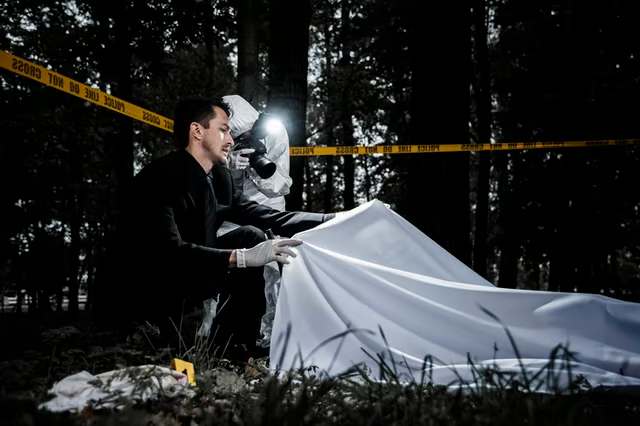
When a death occurs under unusual or suspicious circumstances, the coroner is called in to investigate the cause of death. This is then referred to as a “coroner’s case.” Even a death attended by a physician may become a coroner’s case.
Natural Causes
One of the key duties of a coroner is to establish the cause of death. When a death is due to natural circumstances, the coroner decides how much investigation is required and often gives the attending physician the authority to sign the death certificate.
Coroner's Duties
Cases which may be classified as coroner’s cases include deaths by homicide, suicide, car crashes, as well as deaths that occur in a prison or jail. Once a death has been established as a coroner’s case, the coroner must sign the death certificate and perform an investigation. During an investigation, a coroner can question people, collect evidence from private property, issue subpoenas and ask for medical records. The coroner is awarded the same authoritative powers as an peace officer.
Autopsy
The coroner may order an official autopsy on any coroner’s case. Under these circumstances the performance of the autopsy does not require the permission of the deceased’s family or spouse.
