


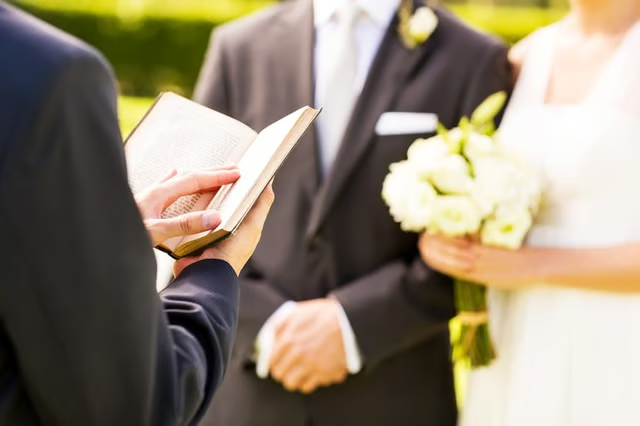
In Canada, just as in the United States, a justice of the peace is entitled to perform marriage ceremonies. However, in addition to those duties, a justice of the peace in Canada is authorized to order people to appear in court to give evidence or answer charges in less serious offenses. As such, a justice of the peace is required to undergo a rigorous qualifying process for the post.
Qualifying to Become a Justice of the Peace
Obtain postsecondary training in a relevant area. Law, business and public administration are good choices. Most justices of the peace in Canada have at least a bachelor's degree, although some are able to enter the field with a diploma or less than four years of education after high school.
Obtain a position as a court clerk. If this is not feasible, find a position as closely related as possible. Justices of the peace are expected to be intimately familiar with the workings of the court. This is also a means of making valuable contacts.
Complete a training program as a justice registrar or a justice of the peace. These training programs replace more formal training as an attorney (solicitor) or a judge. This training, along with several years of experience working with the court system, will provide the qualifications required to obtain an appointment as a justice of the peace.
Apply to the Ministry of the Attorney General or to the Lieutenant Governor for an appointment as a justice of the peace. Expect to undergo a rigorous and lengthy interview process. If successful, the cabinet of the government will enact an "Order in Council" to grant the appointment.
Serve an initial appointment as a nonpresiding justice of the peace. Complete a mentoring program for new justices of the peace. Successful new appointees are then reappointed as presiding justices of the peace, with the full powers of the office.
