


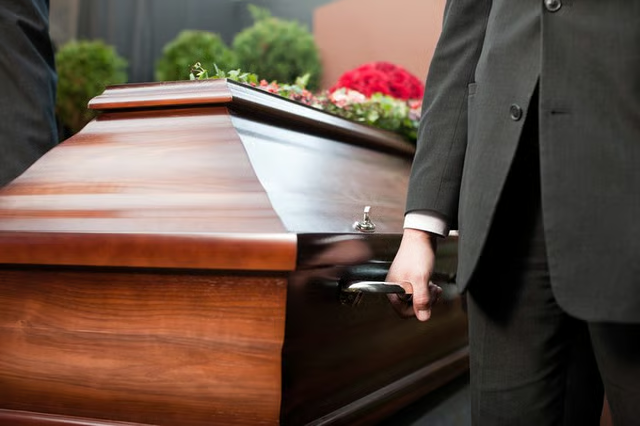
Desairology, or cosmetology for the deceased, is not often discussed, but it’s an important service offered by many funeral homes. Mortuary makeup artists are responsible for making deceased persons look as close as possible to the way they looked in life. Therefore, they must have training and experience in cosmetology as well as some of the special issues associated with working with the deceased, including using cosmetic products specifically designed for mortuary use and handling sanitation.
Basic Cosmetology Experience
Typically, mortuary makeup artists – or desairologists – come from a traditional cosmetology background and hold a cosmetology license. If you are licensed as a funeral director or embalmer, you do not need a cosmetology license to apply makeup on the deceased.
Most mortuary makeups artists, though, are also full-time cosmetologists at salons and spas, and work in mortuaries on a freelance or on-call basis. Specific laws for becoming a makeup artist vary by state, but most require individuals to be at least 16 years old and complete an approved training program, as well as pass an exam to become licensed.
Some cosmetology schools offer coursework specifically in desairology. This training generally includes both instruction in the application of makeup on the deceased as well as how to work with specific cases, such as when the individual died of an infectious disease. However, there is currently no standard certification available for desairology. Those who are interested in this field generally take courses, and build their experience by working in funeral homes.
Getting Work
In most areas, only the largest funeral homes have a makeup artist on staff. It’s far more common for makeup artists to work on an on-call basis. Most makeup artists either respond to a funeral home’s job postings, or contact the establishments on their own to be added to a list of available artists. Expect to provide a copy of your cosmetology license and a portfolio of your work.
Because of some of the inherent risks associated with working on the deceased (many corpses continue to carry potentially harmful organisms) makeup artists may also be required to supply evidence of vaccinations, in particular those for tetanus, tuberculosis and Hepatitis B. Even though you will wear protective equipment, including gloves and a lab coat, while working, it’s important to be protected.
Work Environment
Many cosmetologists are squeamish about the idea of working with the deceased, but those who work in this field generally enjoy it. However, it is not ideal for everyone, as you must not only be comfortable working with corpses, but also interacting with family members during a sensitive time. You must also be skilled in working from photographs or descriptions of how the person looked in life, and of following instructions according to the wishes of the deceased and family.
Pay for mortuary makeup artists varies according to the funeral home and the experience of the artist. A general cosmetologist typically earns about $55 for a makeup application, while a trained desairologist can command about $110 for makeup application.
