


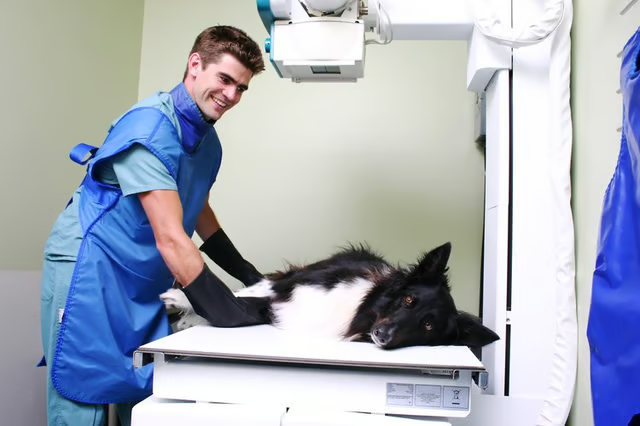
Primary-care veterinarians are qualified to take simple X-rays, but complex imaging techniques and radiation treatments are better left to veterinary radiologists and radiation oncologists, according to the American College of Veterinary Radiology. To qualify for general practice, veterinarians must complete undergraduate training and a four-year Doctor of Veterinary Medicine degree. They must also pass exams for state licensing. In addition, a specialist in veterinary radiology must take post-doctoral training and pass certification exams.
Complete an Internship and Residency
An internship is mandatory for any veterinary specialty. For radiology specialties, the American College of Veterinary Radiologists requires one to two years of internship or employment in a busy private practice. After the internship, complete an approved residency in your choice of two specialties -- diagnostic radiology or radiation oncology. A radiology residency lasts 36 months or more and includes a minimum of 30 months of supervised clinical work performing diagnostic veterinary radiology. A radiation oncology residency takes 24 months or longer and includes instruction and clinical practice in treating veterinary cancers with radiation. Lists of approved residencies are available on the ACVR website.
Pass Certification Exams
After completing a residency, you must pass ACVR certification exams to become a board-certified radiologist or radiation oncologist. The exams are available every September at locations chosen by ACVR. The radiology certificate requires a preliminary multiple-choice test plus a six-part oral certifying exam. The oral portion tests your knowledge of radiology for various areas of the animal body and specific procedures such as magnetic resonance imaging. Certification as a radiation oncologist requires passing a single multiple-choice exam on cases in veterinary radiation oncology.
Veterinarians salary
- Top 10% Annual Salary: More than $164,490 ($79.08/hour)
- Median Annual Salary: $99,250 ($47.72/hour)
- Bottom 10% Annual Salary: Less than $60,690 ($29.18/hour)
