
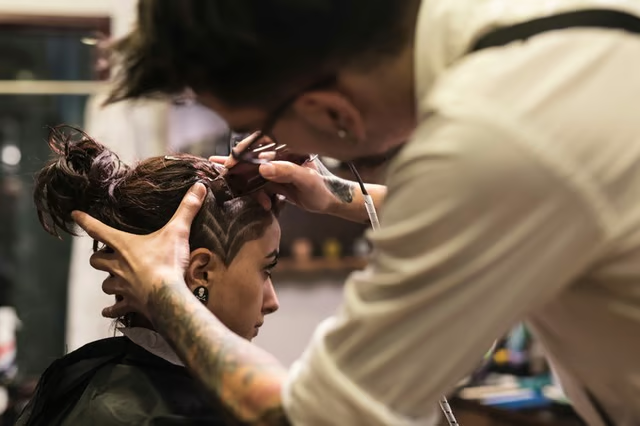
According to the Bureau of Labor Statistics, employment opportunities for barbers and cosmetologists are expected to increase by 20 percent by 2018, with more than 980,000 Americans expected to join the ranks of hairstylists, manicurists, skin care specialists and other beauty professionals. Entry-level wages for licensed cosmetologists are typically low, but can increase with experience, business growth and location. Because cosmetology licenses vary by state, contact your state professional licensing board for education requirements, testing and licensing procedures.
Electrologist
A licensed electrologist removes unwanted hair using an electrolysis machine or laser hair removal system. According to Spa and Beauty Education, an electrologist must take between 300 and 1,100 course hours before obtaining a license. Some states require prospective electrologists to take a state licensing exam and the International Board of Electrologists Certification exam.
Manicurist and Pedicurist
Licensed manicurists clean, shape and polish fingernails and massage hands, while pedicurists perform the same regimen on feet. Most states require manicurists and pedicurists to have a license, which can be obtained with coursework and a written exam. Some states also require classroom and hands-on training as a condition for licensure. Iowa, for example, requires manicurists to complete 40 hours of training from an approved cosmetology arts school and a mandatory exam.
Hair Stylist
Washing, drying, weaving, braiding, wrapping and coloring are part of a hair stylist’s repertoire. Licensed hairdressers can work from a salon, from their home or even make house calls. Each state has different licensing procedures, but many require hairdressers to complete the National Interstate Council of State Boards of Cosmetology exam. Some states, like New York, also require applicants to pass a physical examination before obtaining a hair stylist license.
Esthetician
An esthetician specializes in cleansing, toning or massaging the skin with lotions, creams, tonics and other cosmetic preparations. Additionally, licensed estheticians can apply makeup and trim eyelashes and eyebrows, as well as apply permanent makeup. A licensed esthetician is also knowledgeable on skin disorders, skin analysis and the microscopic layers of the dermis. According to the National Coalition of Estheticians, an esthetician has mastery of these skills after 600 hours of coursework.
