


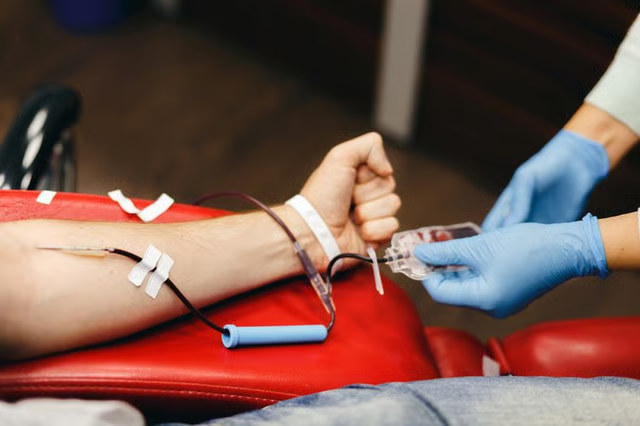
Becoming an independent phlebotomist requires getting the right training and accreditation, and then marketing yourself to the right organizations and businesses that need your services. Phlebotomists collect blood samples for testing, and they work closely with doctors, medical facilities, insurance companies and clinical labs.
Education Requirements
An accredited program such as the one provided by the American Society for Clinical Pathology provides the background, education and tools required for licensing in states requiring it. As a phlebotomist, you must collect samples in a professional and trustworthy way. During your accreditation program, you will learn about proper medical laws, ethics, patient privacy protection, medical terms, human anatomy and use of medical equipment. Each of these areas is critical to obtaining licensing and maintaining an independent practice.
Internship Requirement
To obtain your phlebotomist certificate, most programs require an internship in a clinic. Programs may require up to 120 hours under the supervision of experienced technicians, nurses or phlebotomists. Take this time to learn and build your skills under the mentorship of experienced techs.
Starting a Business
Determine how you want to structure your business. Phlebotomists can work in specific niches, such as the insurance industry, for which you would travel to clients to collect blood for life insurance applications. Others travel to doctors' or medical offices for blood collection without having their own office. However you decide to structure your workdays, establish a state business such as a corporation, limited liability company or sole proprietorship. Discuss the options with your tax advisor before registering with the Secretary of State.
State Testing and Licensing
Not every state requires testing or licensing. Check with your local Department of Health to determine the standards in your state. California, Nevada, Georgia and Louisiana require licensing. Other states may have registration requirements. If you are required to become licensed, take the mandated test and pay any required fees.
Develop Relationships
As an independent phlebotomist, you will rely on your ability to build a client base. This could be an insurance company that calls you for testing or a clinic that sends you out as needed. Be professional in all aspects of your business, including business cards, websites, invoicing and phone conversations. Blood work and medical information fall within a highly regulated and sensitive industry; the more professional you are, the more work you will likely get.
